

Do You Actually Feel Safe In Love? The Controversial Question No One Wants To Ask on Valentine's Day
.jpg)
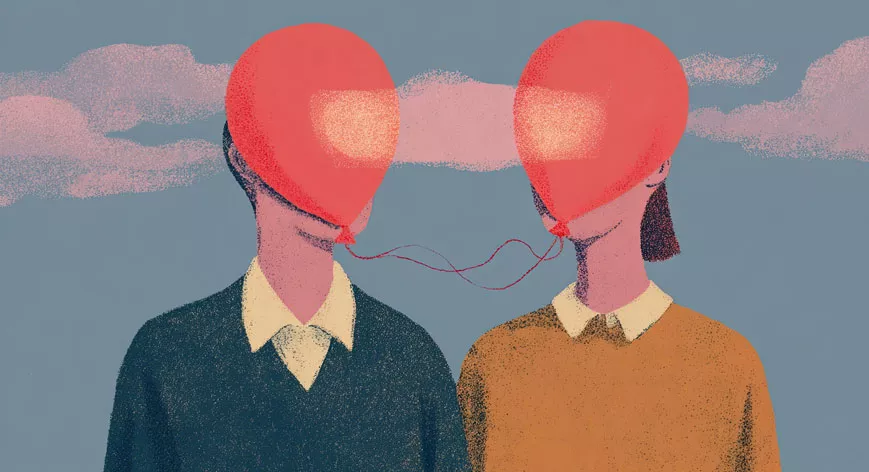
Do You Actually Feel Safe In Love? The Controversial Question No One Wants To Ask on Valentine's Day
This February, forget the flowers—ask yourself the questions that matter most: Do I feel safe? Does my partner feel safe? What can we each do to create safety together?
"Love without safety is just pretty packaging around pain."
Valentine's Day. The shops are filled with roses, chocolates, and cards promising eternal devotion.
For many couples, Valentine's Day is a genuine celebration—a moment to honour connection, safety, and love that feels deeply good. If you're in a relationship where you feel consistently safe, seen, and chosen, this holiday can be exactly what it promises to be.
But for others, Valentine's Day brings something different entirely: guilt, anxiety, dread, or that uncomfortable feeling that you're supposed to be happy but you're... not.
If that's you—if you've been doubting your relationship, if something feels persistently off, if there's a voice inside saying "this isn't right"—trust that voice.
Your body doesn't lie.
Here's what the greeting cards won't tell you: Love without safety is just pretty packaging around pain.
In my 10+ years working with couples in Dubai, February always brings a particular kind of guilt. Couples come to me saying they should be excited about Valentine's Day—but instead, they feel exhausted, anxious, or numb.
When I ask how their relationship is, most say: "Fine."
But their bodies—and their nervous systems—tell a different story.
This article is for both of you—whether you're the one feeling unsafe, or wondering if your partner feels safe with you. Because creating safety in a relationship is a shared responsibility.
The Love Story Your Unconscious Wrote
Here's the plot twist no one prepared you for: You didn't fall in love by accident.
Here's something most people don't know: you were unconsciously drawn to your partner because they mirror your early caregivers—both their strengths and their wounds. Relationship experts call this your "unconscious template for love."
When they're distant, dismissive, or emotionally unavailable, it doesn't just hurt—it reopens your childhood wound.
The wound that whispered: "I'm not important enough. My needs are too much."
That Valentine's card that says "You complete me"? It sounds attractive.
Your unconscious thought your partner would heal you. Instead, they're activating your deepest pain—and you're likely activating theirs too.
Here's the crucial part: You BOTH came into this relationship with childhood wounds. You BOTH have patterns that can make the other feel unsafe. Creating safety isn't one person's job—it's both of yours.

📦 The Safety Check - For Both Of You
Part 1: Do I Feel Safe?
Ask yourself:
• Do I edit what I say before I say it?
• Do I monitor their mood before speaking?
• Do I feel like I'm walking on eggshells?
• Am I shrinking myself to keep the peace?
• Do I feel lonely even when we're together?
If you checked 2+: Your nervous system is telling you you're not safe.
Part 2: What Do I Do When I'm Afraid?
When I feel unsafe, I tend to:
• Pursue for reassurance (call, text, ask "Are you okay?" repeatedly)
• Get anxious and need to know where they are
• Become critical or blame them
• Withdraw and go quiet
• Shut down emotionally
• Get defensive or angry
These are your protective strategies. They developed in childhood to keep you safe—but they might be making your partner feel unsafe now.
Part 3: Does My Partner Feel Safe With Me?
Notice if your partner:
• Seems to edit what they say around you
• Appears to monitor your mood before speaking
• Seems anxious or on edge when you're together
• Has stopped sharing their feelings or needs
• Withdraws when you're upset or critical
If you notice 2+: Your partner might not feel safe with you.
Part 4: What Can I Do To Create Safety?
I can work on:
• Noticing my own defensive reactions
• Staying present when my partner is upset (instead of fixing or fleeing)
• Being curious about my patterns instead of defensive
• Regulating my own nervous system before reacting
• Acknowledging my impact on my partner
• Being willing to get help (therapy, coaching)
Creating safety is an active choice you make every day.
Why You Can't Just "Calm Down" - Understanding Both Sides
When your partner withdraws, your body doesn't just feel sad—it panics.
When your partner pursues you intensely, your body doesn't just feel annoyed—it feels overwhelmed and trapped.
Here's why:
We ALL want connection—that's our human state. But we learned to seek (or protect ourselves from) connection in two opposite ways:
"I Need More Connection" (Anxious Attachment)
When I feel disconnected, I:
• Constantly monitor their mood before speaking
• Seek reassurance over and over
• Make myself small and "easy" to avoid rejection
• Feel desperate when they pull away
These patterns are protecting the wounded part of me that learned early on: "I'm not lovable as I am. I have to earn love."
What my partner experiences: They feel pursued, pressured, trapped, like they can never do enough
What I can work on: Learning to self-soothe, tolerating uncertainty, asking for what I need directly instead of testing
"I Need Space to Feel Safe" (Avoidant Attachment)
When I feel overwhelmed, I:
• Go emotionally numb when they're upset
• Get angry or defensive when "pressured"
• Say "You're too sensitive" or "You're overreacting"
• Need to escape when emotions get intense
These patterns are protecting the wounded part of me that learned: "I'm not enough. Emotions are dangerous. I'll fail them."
What my partner experiences: They feel abandoned, unimportant, like their emotions don't matter
What I can work on: Staying present with discomfort, communicating before I withdraw, acknowledging my partner's pain instead of dismissing it
The tragedy? Both of you are trying to feel safe—but your protective strategies hurt each other.
The solution? Both of you learning to:
1. Recognize your own patterns
2. Take responsibility for your impact
3. Regulate your own nervous system
4. Create safety for each other
The 3 Questions Safe Love Must Answer - For BOTH Partners
In my work with couples, I use Dr. Sue Johnson's research (Emotionally Focused Therapy) on the three core needs every relationship must answer:
1. Are You ACCESSIBLE?
Translation: "Can I reach you? Are you there when I need you?"
💔 Unsafe: Always distracted, on phone, "too busy"
💚 Safe: Turns toward you. "I see you. I'm here."
Ask yourself: Am I accessible to my partner? Do I turn toward them or away?
2. Are You RESPONSIVE?
Translation: "Does my pain matter to you?"
💔 Unsafe: "You're overreacting." "Don't be so dramatic."
💚 Safe: Leans in. "Tell me more. I want to understand."
Ask yourself: Am I responsive to my partner's pain? Or do I dismiss, minimize, or fix?
3. Are You ENGAGED?
Translation: "Do I matter to you? Am I a priority?"
💔 Unsafe: Partner feels like an afterthought
💚 Safe: Show up. Remember. Choose them—daily.
Ask yourself: Is my partner a priority? Do my actions show it?
This Valentine's, ask yourself TWO questions:
1. Does my relationship answer YES to all three for ME?
2. Am I answering YES to all three for my PARTNER?
Both matter. Both create safety.
📊 DID YOU KNOW?
According to research by Dr. John Gottman, 69% of relationship conflicts are perpetual—they never fully resolve. The key isn't solving them, but understanding the emotional wounds underneath—in both of you.

The Dance You're Both Dancing
Most struggling couples I work with are caught in what I call the Anxious-Avoidant Dance—and both partners are responsible for keeping it going:
Here's what the cycle looks like:
Step 1: Partner A reaches for connection
↓
Step 2: Partner B pulls away (feeling pressured/overwhelmed)
↓
Step 3: Partner A pursues harder (panic rising, feeling abandoned)
↓
Step 4: Partner B withdraws more (feeling inadequate/trapped)
↓
Step 5: Partner A's wound confirms: "See? I'm not lovable."
↓
Step 6: Partner B's wound confirms: "See? I'm failing them."
↓
Step 7: Repeat until exhausted
Here's the truth:
Partner A isn't "too needy" - they're trying to feel safe through connection
Partner B isn't "cold or distant" - they're trying to feel safe through space
You're both trying to feel safe—in ways that accidentally hurt each other.
"You cannot love someone into emotional availability. No amount of devotion will change them if they're unwilling to do the work."
But here's the fuller truth: You're BOTH responsible for doing the work. You're BOTH responsible for creating safety.
Security = Vulnerability Received With Empathy
Partner A's responsibility: Offer vulnerability without blame
Partner B's responsibility: Receive vulnerability with empathy (not fixing)
Both are required. Both create safety.

Red Flags - But Also: What Are YOU Contributing?
This Valentine's, watch for patterns in your relationship:
Red Flags in Your Partner:
💔 Treats affection like a choice (not a natural expression)
💔 Makes you feel ashamed for wanting consistency
💔 Says "You're too needy" when you express needs
💔 Can't stay present when you're vulnerable
💔 Refuses to do their own healing work
💔 Cannot acknowledge their impact on you
Red Flags in Yourself:
💔 Am I pursuing so intensely that my partner feels trapped?
💔 Am I withdrawing so completely that my partner feels abandoned?
💔 Am I dismissing my partner's emotions as "too much"?
💔 Am I refusing to look at my own patterns?
💔 Am I making my partner responsible for all my emotional regulation?
💔 Am I unwilling to acknowledge my impact on them?
Your gut knows. Listen to it. And be honest about BOTH sides.
📦 What You Both Deserve
Forget the chocolates. Here's what real love looks like—and what both partners create together:
✓ Both partners have done their inner work
✓ Both can stay present when things get hard
✓ Both see each other's emotions as natural, not burdens
✓ Love that feels calm—not chaotic (created by BOTH)
✓ Connection that feels like coming home—not chasing or fleeing (BOTH participating)
Healthy love doesn't make either of you smaller. It lets both of you breathe.
Your Valentine's Self-Check - For Both Of You
You may want to try this together or separately:
Close your eyes and breathe normally.
Notice what's present:
Anxious? Hopeful? Scared? Resentful? Guilty? Defensive?
Ask gently: Can these feelings step back for just a moment?
What's left is your wise, calm centre.
From this place, take a gentle breath and ask:
About Your Own Safety:
• "Do I feel safe in this relationship?"
• "Does this love let me be fully myself?"
• "Am I settling for familiar pain instead of actual safety?"
About Your Partner's Safety:
• "Does my partner feel safe with me?"
• "What do I do when I'm afraid that might make them feel unsafe?"
• "Am I willing to look at my own patterns?"
• "What can I do differently to create safety for both of us?"
Listen. Your deepest self knows the answer—to both questions.
The Hard Truth About Healing Love
You cannot love someone into emotional availability.
But you also can't expect your partner to create all the safety while you do none of the work.
If Your Partner Is Unwilling:
If your partner is unwilling to:
• Acknowledge their patterns
• Go to therapy
• Do the work to access their calm, compassionate self
• Take responsibility for their wounds
...then no amount of devotion will change them.
The most loving thing you can do—for yourself—is stop re-wounding yourself by staying.
If YOU Are Unwilling:
But ask yourself honestly:
• Am I willing to acknowledge MY patterns?
• Am I willing to go to therapy?
• Am I willing to take responsibility for MY wounds?
• Am I willing to look at how MY behavior might make my partner feel unsafe?
If you're not willing to do the work, you can't expect your partner to feel safe with you either.
If You're BOTH Willing:
But if you're BOTH willing—and you both show up to heal—you can transform this.
Not back to what it was (that relationship had cracks).
Into something new, honest, and truly safe—created by both of you.
I love this quote by relationship psychotherapist Esther Perel: "Most of us will have 4-5 different marriages in our lifetime. Hopefully most of them are to the same person."
This gives the couples I work with hope that things can change, that their life together can be better—when BOTH are willing to do their deep work, individually and together.

📦 3 Signs You Are Both Willing To Do the Hard Lifting Work
1. You both acknowledge your patterns
Not defensively—with genuine curiosity about your own wounds and how they impact the other
2. You both seek help
Therapy, books, workshops—not just promises to "try harder"
3. You both show up differently—consistently
Actions over time from BOTH partners, not just words in the moment
"But My Partner Won't Go to Therapy..."
This is one of the most common concerns I hear in my practice.
Here's the truth: You can't force someone into therapy. However, you CAN:
1. Start with individual therapy for yourself
Even if your partner won't come, you can:
• Heal your own patterns
• Understand your cycle
• Make empowered decisions
• Work on YOUR side of creating safety
Many of my clients start individually, and their partners join later once they see the changes.
2. Frame it as "relationship coaching" not "therapy"
Some people resist the word "therapy" but are open to "coaching" or "relationship skills training."
Try: "I've found someone who teaches couples communication and conflict tools. Would you be willing to try a few sessions?"
3. Set a timeline
If your partner refuses help but promises to "try harder" on their own:
Give it 3 months. If nothing changes by [specific date], you revisit the conversation.
This prevents years of waiting for change that never comes.
4. But also ask: Am I willing?
Before you insist your partner go to therapy, ask yourself:
• Am I willing to go (individually or as a couple)?
• Am I willing to look at MY patterns?
• Am I willing to take responsibility for MY impact?
If you're demanding your partner change while refusing to look at yourself, that's not fair—and it won't work.
5. Go alone if needed
If your partner absolutely refuses and won't budge—or if YOU need to work on your side first:
Individual therapy can help you:
• Understand why you're tolerating emotional unsafety
• Understand YOUR patterns that might contribute to unsafety
• Heal your childhood wounds that keep you stuck
• Make decisions from a place of clarity (not desperation)
• Prepare to leave if that's what's needed—OR prepare to stay and do YOUR work
You don't need your partner's permission to get help. And you can work on YOUR side of creating safety even if they're not ready yet.
When Waiting Becomes Harmful: The Case for Getting Help NOW
I see this all the time: couples wait years before seeking help—hoping things will improve on their own, or waiting for the OTHER person to change first.
But here's the truth I've learned from working with hundreds of couples: The longer you wait, the harder it becomes. And change starts when ONE person is willing to look at their side.
The research is clear:
• Couples wait an average of 6 years before seeking therapy
• By that time, resentment has hardened, distance has widened, and patterns have calcified
• The earlier you intervene, the better your chances of rebuilding
• Change often starts when one person does their own work—not when both are "ready"
If you're recognizing yourself in this article, don't wait.
Seek help if:
• You've been feeling unsafe for more than 6 months
• You're experiencing physical symptoms (insomnia, anxiety, chronic stress)
• Your partner refuses to acknowledge issues—OR you're refusing to acknowledge YOUR patterns
• You're both stuck in the pursue-withdraw cycle
• You're considering leaving but want to know you tried everything first—including working on yourself
Couples therapy isn't a last resort. It's a smart, proactive choice.
Individual therapy is ALSO a smart, proactive choice—even if your partner won't come.
You wouldn't wait 6 years to see a doctor about chest pain. Why wait to address the pain in your relationship—or to work on your side of creating safety?
Ready to understand your patterns and create safety together (or start with yourself)?
Book a free 20-minute introductory call
In this call, we'll:
• Discuss what's happening in your relationship
• Explore BOTH partners' patterns (not just one)
• Determine if Heal & Reconnect or Rebuild & Restore is right for you
• Discuss individual therapy if your partner isn't ready yet
• Answer your questions about the process
• Give you clarity on next steps
You don't have to figure this out alone. And you can start with YOUR side. Let's talk. 💙
This Valentine's Day: Choose Mutual Responsibility for Safety
You were not made to beg for emotional presence.
You were not made to heal someone else's wounds while yours bleed.
You were not made to settle for defended love.
But you're also not exempt from doing your own work.
This Valentine's, give yourself—and your relationship—the gift of truth:
Ask:
• "Am I actually safe here?"
• "Is my partner safe with me?"
• "What am I contributing to the unsafety?"
• "Am I willing to do MY work?"
If the answer is:
"No, I'm not safe—and my partner won't do the work" → The most loving thing you can do is let go.
"I'm not sure—but I'm willing to work on MY side first" → Start with individual therapy. Your work will change the dynamic.
"Yes, we're both willing" → Commit to healing together. Both doing the work. Both creating safety.
Because you deserve love that feels like safety.
And so does your partner.
Not just on Valentine's Day. Every single day.
📖 RESOURCES
Books Worth Reading:
• Hold Me Tight by Dr. Sue Johnson (Emotionally Focused Therapy)
• Getting the Love You Want by Harville Hendrix (Imago Relationship Therapy)
• No Bad Parts by Dr. Richard Schwartz (Internal Family Systems)
• The Seven Principles for Making Marriage Work by Dr. John Gottman
• Attached by Amir Levine & Rachel Heller (Understanding Attachment Styles)
Need Help?
If you're struggling to understand your patterns—or your partner's—or if you want to work on creating safety together (or start with yourself), working with a therapist trained in IFS, EFT, or Imago therapy can help you break the cycle.
Book a free introductory call.
About the Author
I'm Evelyne Thomas, a Mental Health & Relationship Coach based in Dubai. Trained in Internal Family Systems (IFS), Emotionally Focused Therapy (EFT), Imago Relationship Therapy as well as Gottman Method, I specialise in helping couples (and individuals) understand their patterns and create mutual safety in relationships.
With over 10 years supporting individuals and couples, and more than 40 years of experience living and working in the UAE, I bring deep cultural sensitivity and evidence-based approaches to help people break painful cycles and rebuild emotional safety—whether working individually or as a couple.
I work with English and French-speaking clients online worldwide or in-person in Dubai.
All cultures, all backgrounds, all love stories are welcome.
Never Miss a New Journal Entry
Join the newsletter to stay up to date on the latest from the blog and get answers on mental health and relationships.
Latest Posts
Reflections About Love, Life and What It Means To Live Consciously

The Deeper Journey to Connection - Can Second (Or Third) Marriages Truly Thrive?

Make Your Dreams a Reality - Building Your Relationship Vision

Attachment Styles - How Our Childhood Impacts Our Adult Relationships

The Dance of Consciousness: How Personal Growth Transforms Your Relationships
Healing your Relationship Patterns - Attract The Partner You Want
